




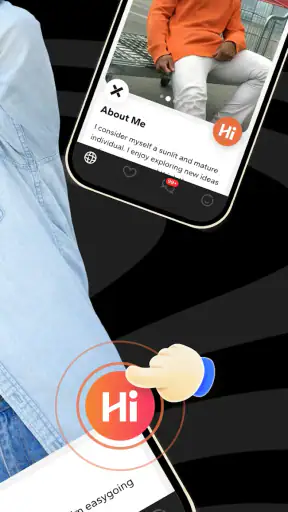
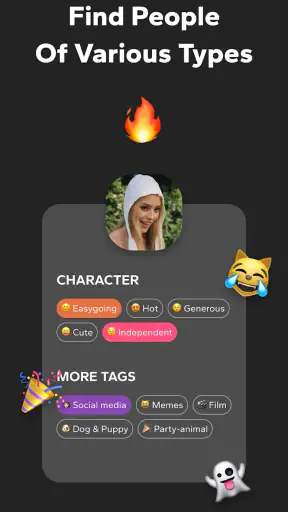
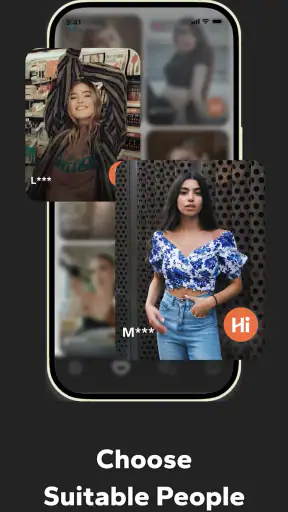
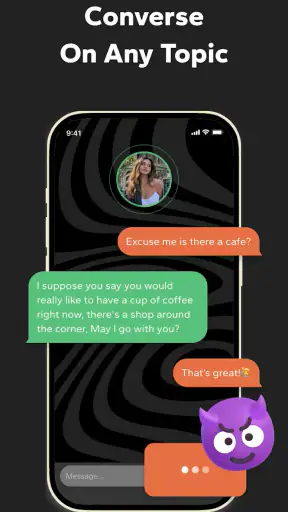
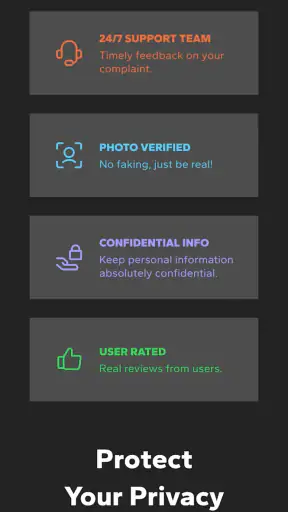

I approached Hugi: Meet Real Local People as a dating app that wants to feel more personal than a fast swipe through an endless catalog. It sits in the social category, is free to install, and is aimed at adults looking for conversations and possible relationships with people nearby. That sounds familiar at first, but the important question is not whether the idea is new. It is whether the app gives me enough control to decide who I interact with, what I share, and when a conversation deserves more of my time.
After spending time with it, my view is cautiously positive. Hugi is easy to understand, and its local-dating angle can make matches feel more relevant than profiles scattered across a huge area. At the same time, a dating app is only as comfortable as its privacy choices and community behavior. I would not recommend rushing into conversations or treating a profile as proof of identity. I would recommend using it deliberately, with clear boundaries, especially because it is rated Mature 17+ and includes optional purchases.
What Hugi feels like in everyday use
The basic appeal is straightforward: open a social space focused on meeting people who may be close enough for a real-life connection. I can see the value for someone who has recently moved, works remotely, spends little time in traditional social settings, or simply wants to widen a local circle without committing to a formal dating event.
A realistic example would be someone who finishes work, has a small amount of free time, and wants to see whether there are interesting people nearby before deciding whether to start a conversation. Hugi fits that moment better than a broad social network because the purpose is clearer. I am not trying to follow a celebrity, join a public discussion, or sort through unrelated posts. I am looking for a possible personal connection.
That focus is also the app's first limitation. A local pool can feel useful when it contains people who match my interests and intentions, but it can feel repetitive when the same profiles appear or when nearby users are not looking for the same kind of relationship. I would not install it expecting an unlimited stream of compatible matches. The quality of the experience depends heavily on the people active in my area.
Interactive Zone Limited is the developer behind the app. Hugi was released on December 15, 2022, and the current version is 1.6.4. It supports devices running Android 8.0 or later. Those details matter in practical terms: the app is not limited to only the newest phones, but anyone using an older Android device should check compatibility before planning around it.
The service has reached over one million installs, with an average rating of 4.1 from around thirty-six thousand ratings and roughly three thousand eight hundred written reviews. I read that as evidence of meaningful interest rather than a guarantee that every local community will be active. Dating apps can perform very differently from one city or age group to another, so I would judge Hugi by the quality of nearby profiles after a short trial, not by its overall store presence.
Trust starts with what I choose to reveal
The most important habit I developed while using Hugi was treating my profile as a gradual introduction rather than a complete biography. A dating profile needs enough information to start a genuine conversation, but it does not need my workplace, exact routine, home area, or every social account. I would begin with broad interests, a clear photo, and a short description of what I hope to find.
This is especially useful in a local app. The closer the potential matches are geographically, the easier it can be for small details to identify me. Mentioning a very specific employer, a regular evening location, and a narrow neighborhood can reveal more than intended when those details are combined. I found that the best profile is not the most detailed one; it is the one that gives someone a reason to speak with me without handing over a map of my life.
Hugi's mature age rating is another reason to approach conversations thoughtfully. I would not treat the rating as a promise that every interaction will be mature, respectful, or suitable for me. It is a reminder that the app is designed for adults and may contain adult-oriented dating conversations. Anyone uncomfortable with that environment, or anyone looking for a general friendship app for younger users, should choose a different service.
I also recommend separating the stages of contact. A match or first message should stay inside the app until I have enough confidence in the person. Moving immediately to a phone number or another messaging service removes some of the distance that can make it easier to end an uncomfortable interaction. Keeping the early conversation contained gives me a simple exit: stop replying, remove the connection, or use the app's available account controls instead of explaining myself at length.
Permissions and data-sensitive moments
Trust in a dating app cannot come from a friendly description alone. I pay attention to the permission prompts shown during setup and whenever I try a feature that needs device access. I read each request in context, allow only what makes sense for the action I am taking, and revisit permissions through Android settings if I change my mind.
Location is the most sensitive example. A local-meeting app may need some form of location access to make nearby discovery useful, but I would not automatically grant the broadest option simply because it appears during onboarding. If Android offers a choice between limited and continuous access, I would select the least expansive option that still supports the feature I actually want. I would also avoid presenting a precise home location in my profile or messages.
Photos deserve the same care. I would select only the images needed for the profile instead of giving an app a completely open view of my personal gallery when a narrower picker is available. Before uploading, I would check the background for school names, street signs, work badges, vehicle plates, or documents. This is a small step, but it prevents accidental disclosure that a dating profile does not need.
Notifications can expose more than expected on a lock screen. If a message preview includes a person's name or private wording, someone nearby may see it. I would change notification display settings if I share a home, office, or device with others. That is not a criticism unique to Hugi; it is a practical privacy step for any app where conversations may become personal.
I would also review the phone's permission manager after installing or updating the app, rather than assuming the first choice remains appropriate forever. An update can change how a feature works, and my own needs can change too. The useful principle is simple: grant access for a specific purpose, not out of habit.
How I handle profiles, messages, and uncomfortable contact
The strongest part of a local dating workflow is the ability to filter my attention. I do not need to respond to every message, and I do not consider politeness a reason to continue a conversation that feels wrong. A short profile can be enough to start, but I look for consistency between the person's photos, writing, and answers over time.
One practical technique is to ask ordinary, open questions before discussing anything sensitive. I might ask what they like doing locally or what kind of weekend they enjoy. The aim is not to interrogate them. It is to see whether the conversation feels natural and whether their answers remain coherent. I avoid sharing financial details, copies of identification, travel plans, or information that could be used to guess security questions.
If someone pushes quickly for money, investment advice, gift cards, intimate images, or an urgent favor, I treat that as a reason to stop. A convincing profile does not remove the need for caution. I would save the relevant conversation if I need to report it, then use the app's visible options for blocking or reporting where available. I would not argue with the person or try to investigate them myself.
Another useful trade-off is deciding how much profile information to use at the beginning. More detail can improve the chance of a meaningful match, but it also makes the profile easier to identify outside the app. I prefer broad preferences and a few genuine interests first. After trust develops, I can choose whether to disclose more. That staged approach is more comfortable than trying to create a perfect profile on the first day.
I also avoid assuming that “local” means “safe.” Meeting nearby can reduce travel, but it can also make it easier for a stranger to recognize my routine. For a first meeting, I would choose a busy public place, tell a friend where I am going, arrange my own transport, and avoid sharing my home address. I would keep the first meeting short enough that leaving feels easy.
Free access, purchases, and user agency
Hugi is free to install, but it includes in-app purchases ranging from $0.99 to $499.99 per item. That is a wide range, and it makes purchase awareness essential. I would not buy anything during an emotional moment simply because I want more attention or faster results. Before confirming a payment, I would read the item description, check whether it is a one-time purchase or part of a recurring arrangement, and confirm the account's spending controls.
The free entry point is helpful because it lets me judge whether the local community suits me before spending money. My advice is to use that period to learn the app's rhythm: how quickly conversations develop, whether profiles seem relevant, and whether I can manage unwanted contact comfortably. If the free experience does not feel useful, paying more is unlikely to solve the underlying problem of an inactive or mismatched community.
Purchases can also change how I evaluate matches. If I pay to increase visibility or access an optional function, I may feel pressure to keep using the app even when conversations are unproductive. I try to separate the cost from the emotional result. A purchase may change exposure, but it cannot create compatibility, honesty, or mutual interest.
Account control matters just as much as discovery. I would look through the profile and settings areas for ways to edit personal details, adjust notifications, manage visibility, and leave the service if I no longer want an account. I would also check my Google Play subscription and payment settings rather than relying only on the app screen. If I uninstall the app, I would not assume that automatically closes an account or ends a billing arrangement; I would confirm those actions separately.
This is where Hugi is best used as a tool rather than a commitment. I can try it, set boundaries, and stop when it no longer fits. That mindset protects me from the common dating-app trap of treating continued activity as progress.
Where it fits beside familiar alternatives
Compared with a general social network, Hugi has a clearer purpose. A mainstream network may offer a larger variety of communities, but romantic intent can be ambiguous, and local discovery may not be central. Hugi is more direct for someone who wants to meet potential partners rather than slowly infer whether another person is interested.
Compared with a large international dating service, its local emphasis can be an advantage when distance is the main obstacle. I would rather have a smaller set of plausible nearby conversations than spend time on profiles that are unrealistic to meet. The trade-off is reach: people in smaller towns, rural areas, or less active age groups may find a broader service more useful.
Compared with friendship-first apps, Hugi is also more relationship-oriented. That can save time if my intention is clear, but it may feel too narrow if I mainly want casual social contact, activity partners, or a new community without romantic expectations. In that situation, a local interest group or general friendship platform would probably be a better match.
I would choose Hugi when proximity and dating intent are my priorities. I would choose a larger alternative when I need a wider pool, stronger filtering depth, or a more established community in a particular region. I would choose a non-dating social app when I want low-pressure interaction. None of those choices is universally better; the right one depends on whether I value local relevance more than scale.
Who should try it and who should skip it
Hugi is a reasonable option for adults who want a focused way to explore local dating, are comfortable starting conversations with strangers, and are willing to manage their own privacy carefully. It may suit someone who dislikes the noise of a general social network and wants a clearer reason for being there.
I would be more cautious about recommending it to anyone who feels pressured by matching systems, tends to spend impulsively on social attention, or wants complete certainty about another person's identity before talking. No dating app can remove those risks. Someone who needs a highly controlled professional matchmaking process may prefer a service built around deeper compatibility steps and human moderation.
I would also skip it if the local user pool is too small or if the available profiles do not reflect my intentions. The app's overall audience cannot guarantee a useful experience in my specific area. After a brief, free evaluation, I would rather move on than keep adjusting a profile that is not reaching the right people.
My cautious verdict
Hugi: Meet Real Local People is a straightforward social dating app with a useful focus on nearby connections. I like that the free starting point makes it possible to test the community before paying, and I can see its value for adults who want dating conversations tied to real-world distance. Its 4.1 average and more than one million installs suggest that many people are willing to try it, but those figures should not replace my own judgment about the profiles and conversations I encounter.
My recommendation is to use it slowly: keep the first profile selective, review permission prompts, limit notification previews, avoid moving sensitive conversations elsewhere too quickly, and treat every purchase as optional rather than necessary. I would also keep control of the account and payment settings outside the emotional momentum of a match.
In the end, Hugi works best when I use it as a doorway to conversation, not as proof that a relationship will happen. For adults who want local dating and can maintain firm boundaries, it is worth trying. For anyone seeking a very large audience, friendship without romantic pressure, or a heavily managed matchmaking experience, another category of app may serve them better. My final feeling is cautiously favorable: the app is most valuable when user agency comes before speed.


